
Decoding Gen Z & Alpha: How the Next Generation Shapes Beverage Packaging
Gen Z and Gen Alpha are redefining how beverage products are discovered and chosen. Unlike previous generations, they often encounter products first through social media, e-commerce platforms, or peer-driven content before ever seeing them in-store.

A New Decision-Making Context: From Shelf to Screen
Gen Z and Gen Alpha are redefining how beverage products are discovered and chosen. Unlike previous generations, they often encounter products first through social media, e-commerce platforms, or peer-driven content before ever seeing them in-store.
This shift fundamentally changes the role of packaging. It must now perform in two environments at once—standing out on a crowded shelf while also being instantly recognizable on a small mobile screen. In both cases, the window to capture attention is extremely short.
As a result, packaging needs to communicate quickly and clearly. Strong visual hierarchy, bold design, and simplicity are no longer aesthetic choices—they are essential for visibility in a fast-scrolling, content-heavy world.
Premium Is No Longer Just Visual
While younger consumers are visually aware, their definition of “premium” goes beyond design.
Rather than relying purely on aesthetics, they evaluate packaging through more tangible and functional cues. Material quality, practicality, and trust signals play a central role in shaping perception. This reflects a shift toward a more grounded and rational decision-making process, where appearance may attract attention, but substance determines choice.
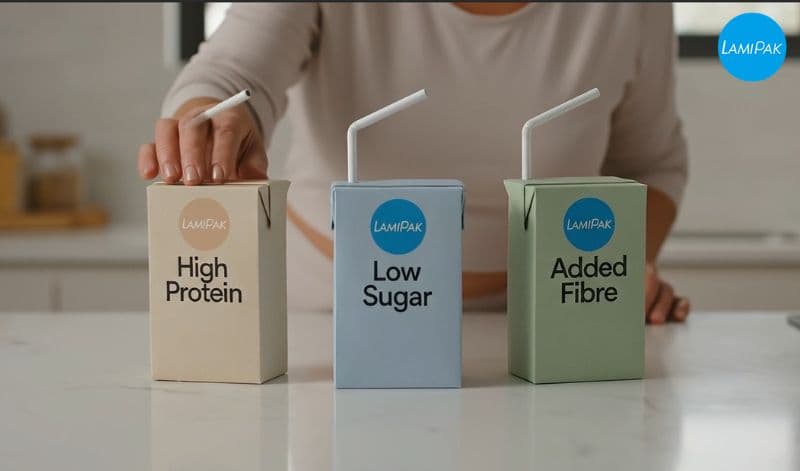
Design still matters, but its role has evolved. It is no longer about decoration or storytelling alone—it is about clarity. Effective design helps consumers understand key product benefits instantly, reduces the effort required to evaluate options, and reinforces credibility. In this sense, design works best when it supports function, not when it competes with it.
Convenience and Sustainability Must Be Effortless
For Gen Z and Gen Alpha, convenience is not a bonus—it is expected. Their consumption habits are shaped by mobility and multitasking, with beverages often consumed on the go or between activities. Packaging that is difficult to open, carry, or reseal quickly becomes a barrier, regardless of how appealing it looks.
At the same time, sustainability plays an important role in shaping preferences—but only when it is practical.
Younger consumers show a clear willingness to support sustainable packaging, yet their preferences are selective. They tend to favor solutions that are easy to understand and act upon, such as recyclable or reusable formats, while more complex claims are less impactful. This highlights an important point: sustainability must be both visible and intuitive. If consumers cannot quickly grasp what makes a package sustainable, the message loses its value.
Packaging as Experience, Not Just Format
Beyond function, packaging is increasingly becoming part of the overall product experience. For younger consumers, beverages are not only consumed—they are also shared, displayed, and associated with personal identity.
This creates new expectations. Packaging must not only deliver on practicality and clarity, but also feel relevant and engaging. It becomes a touchpoint that reflects lifestyle, taste, and even social expression.
For beverage brands, the implication is clear. Success lies in integrating multiple roles into one cohesive solution—packaging that captures attention, communicates instantly, functions seamlessly, and aligns with consumer values.
In this evolving landscape, packaging is no longer just about containing a product. It is about enabling better decisions, stronger connections, and more meaningful experiences for the next generation of consumers.