Global Dairy Is Being Rewritten: From Staple to System of Solutions
For decades, dairy has been one of the most stable categories in food—defined by routine consumption, standardized formats, and broad nutritional value. That stability is now breaking.
From Stable Category to Structural Shift
For decades, dairy has been one of the most stable categories in food—defined by routine consumption, standardized formats, and broad nutritional value. That stability is now breaking.
What was once a category of products is rapidly transforming into a system of targeted solutions, shaped by function, occasion, and format. This is not incremental change—it is a structural reset.
What’s driving this shift is not just innovation—but a redefinition of consumer expectations. Consumers no longer look to dairy as a default staple, but as a tool to solve specific needs throughout the day. This forces the category to evolve from consistency to adaptability—expanding its role across more occasions, formats, and benefits than ever before.
The Rise of Functional Performance
At the center of this transformation is the rapid expansion of functional benefits.
Protein has emerged as dairy’s strongest growth engine, expanding at approximately 12% annually between 2021 and 2025. But its role has evolved beyond muscle building. It is now positioned as a multi-dimensional benefit—linked to energy, immunity, cognitive performance, and even beauty outcomes.
In parallel, gut health is becoming a foundational platform, growing at nearly 10% annually. Increasingly, consumers see digestive health not as a niche concern, but as the starting point for overall wellbeing—impacting everything from immunity to mental clarity.
What’s critical here is not just the growth of these functions, but their expanding scope. Dairy is no longer delivering isolated benefits—it is evolving into a multi-functional delivery system.
For brands, this raises the bar significantly. Competing on a single benefit is no longer enough; products are expected to deliver layered functionality that aligns with broader health goals.
Format Becomes the Battleground
Function alone does not win—delivery defines success.
Dairy beverages are emerging as the dominant innovation format, outperforming the broader category and increasingly positioned as convenient, functional snacks. This reflects a broader shift toward speed, portability, and ease of integration into daily routines.
This is not just a format shift—it is a strategic one. Liquid formats allow brands to:
· deliver multiple benefits more efficiently
· fit into more consumption occasions
· compete directly with functional beverages and supplements
As a result, competition is shifting away from traditional category boundaries. The key question is no longer “what type of dairy product is this?”, but:
“Does this format fit the moment better than alternatives?”
From Meals to Micro-Occasions
At the same time, consumption itself is fragmenting.
Dairy is no longer tied to structured meals. Instead, it is spreading across micro-occasions throughout the day—each with distinct needs, expectations, and product formats.
This shift is driven by changing lifestyles: more flexible schedules, increased snacking, and a growing preference for personalized consumption moments. As a result, demand is rising for products that are not just functional, but also context-specific.
Indulgence is also being redefined within this context. Rather than being associated with excess, it is becoming permission-based—where enjoyment is balanced with health cues such as low sugar and natural ingredients.
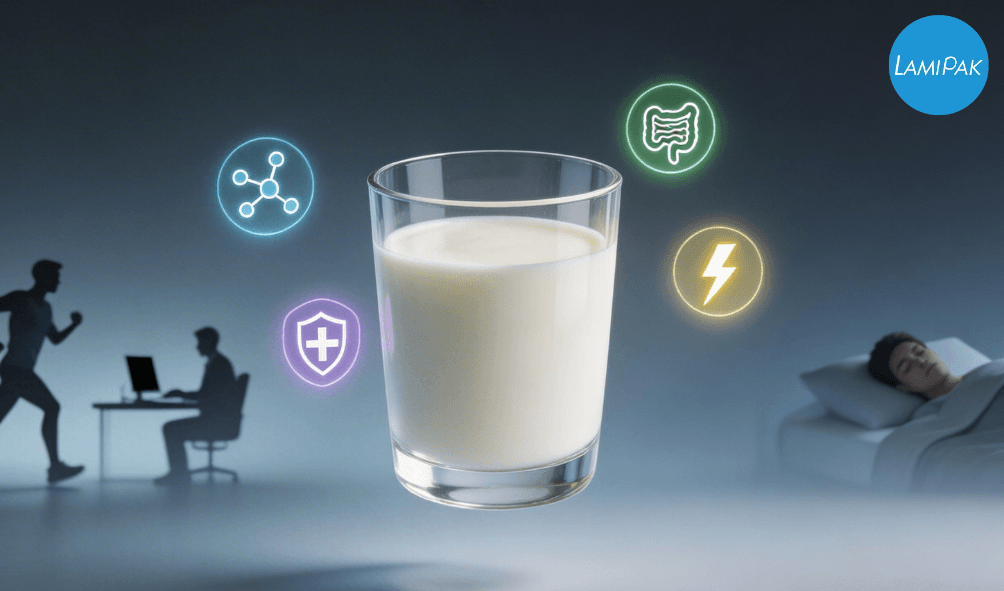
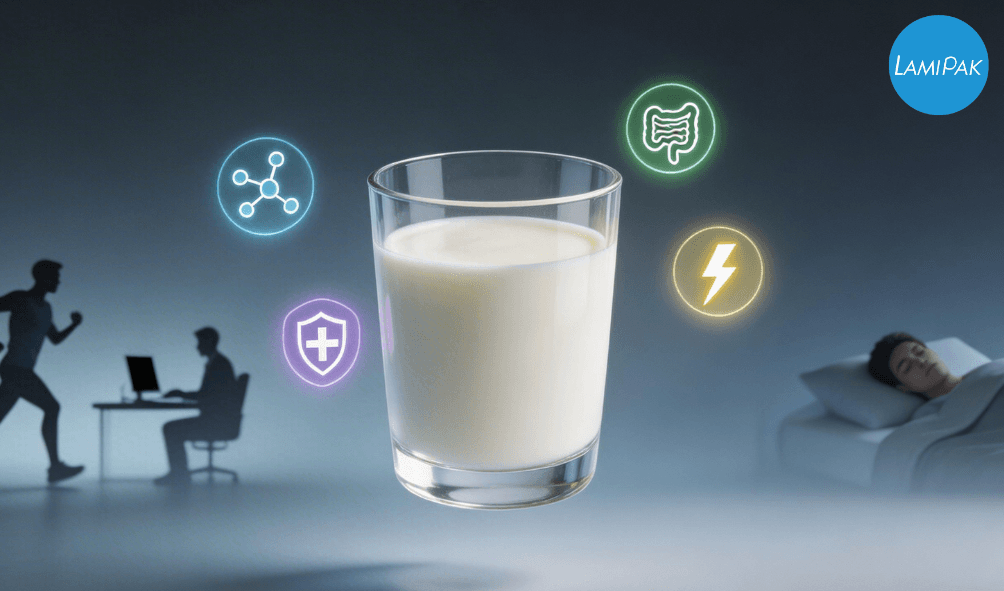
For brands, this means designing products not just around benefits, but around specific use-cases—from post-workout recovery to late-night relaxation.
The Convergence Effect: Where Trends Collide
The most important shift is not any single trend—but how they are converging.
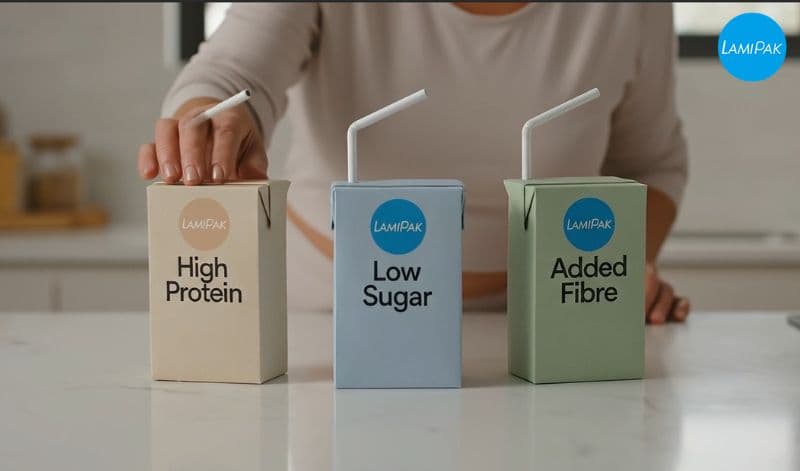
Today’s dairy products increasingly combine multiple benefits into one proposition—integrating protein, digestive support, sugar reduction, and convenience into single offerings.
This reflects a deeper change in consumer expectations. Rather than choosing between benefits, consumers now expect products to deliver multiple outcomes simultaneously, without added complexity.
This convergence creates both opportunity and pressure. While it enables stronger value propositions, it also increases the complexity of product development, positioning, and communication.
A New Competitive Landscape
These shifts are fundamentally reshaping competition.
Dairy is no longer competing within its own category, but against a broader ecosystem of products that deliver similar benefits across different formats and occasions.
As a result, the definition of success is changing:
It is no longer about what a product is—but what it does, when, and how efficiently it delivers it.
Winning in this new landscape requires more than innovation—it requires integration. The brands that succeed will be those that can combine function, format, and occasion into cohesive, intuitive solutions.
In a category once defined by simplicity, complexity—when executed well—becomes the new competitive advantage.