
Beyond Soy: How Southeast Asia Is Rewriting the Alternative Protein Playbook
Southeast Asia has consumed plant-based protein for millennia. Tofu in Vietnam, tempeh in Indonesia, and soy milk across the region are not wellness trends — they are cultural staples.
Southeast Asia has consumed plant-based protein for millennia. Tofu in Vietnam, tempeh in Indonesia, and soy milk across the region are not wellness trends — they are cultural staples. Yet something has fundamentally shifted. A new wave of health-conscious urbanization, rising disposable incomes, and investor-backed food-tech innovation is transforming this ancient dietary habit into one of the most commercially compelling segments in FMCG today. The question for brands is no longer whether plant-based protein will matter in SEA. It is how fast — and who will capture the value.
The answer, drawn from both regional market data and global trend analysis, points to a market at a genuine inflection point. Growth is accelerating across formats — from plant-based beverages and drinkable dairy alternatives to meat substitutes and functional protein ingredients — and the dynamics differ meaningfully by country. Understanding those nuances is where strategic advantage is made.
A Billion-Dollar Expansion in Motion
At the macro level, the Asia-Pacific alternative protein market is on a steep growth trajectory. Valued at USD 3.55 billion in 2024, the market is forecast to reach USD 7.86 billion by 2033 — a compound annual growth rate of approximately 9.2%. This outpaces most mature FMCG categories and reflects a broad structural shift rather than a trend cycle. Public investment is reinforcing private conviction: government and institutional funding for alternative proteins in the Asia-Pacific region reached USD 510 million in 2024, with cultivated meat R&D attracting record contributions.

Chart 1: Asia-Pacific Alternative Protein Market Size Trajectory, 2024–2033 (USD Bn). Sources: MarketDataForecast, GFI APAC, Emergen Research.
Within the broader alternative protein umbrella, plant-based beverages are the gateway category in SEA. The “other plant-based drinks” segment — covering oat, almond, rice, and nut-based milks — is the fastest-growing beverage segment in the SEA-6 at 6.6% CAGR through 2028, according to Lamipak’s market intelligence analysis. Even the long-dominant soy segment is recording 3.5% CAGR, reflecting that category incumbency still delivers solid volume growth.
Three Markets, Three Distinct Battlegrounds
The SEA plant-based story is not monolithic. Three markets deserve particular attention, each at a different stage of the adoption curve and each requiring a different strategic playbook.
Thailand leads in absolute plant-based milk volume and market size (USD 831 million in 2024), underpinned by a mature modern retail infrastructure and a food culture that has long embraced tofu and soy. Thailand’s plant-based food market is estimated at USD 1.5 billion in 2024, making it one of the most developed in the region. Growth is steadier here — a 3% CAGR for plant-based milk — but the premium and functional positioning opportunity is real, particularly for imported oat and almond formats targeting urban consumers in Bangkok.
Indonesia is the region’s most compelling growth opportunity. Its plant-based food market stood at USD 990 million in 2025, growing at 5.4% CAGR, while plant-based beverages are expanding at 7% CAGR. Meat substitutes are even faster at 7% CAGR, energized by homegrown brands like Green Rebel and a government fortification mandate requiring 6 grams of protein per 100 grams in subsidized staples — a policy tailwind that creates demand across the entire protein innovation space. Critically, Indonesia’s high prevalence of lactose intolerance is structurally favorable for plant-based beverages: dairy-alternative drinks command 37% of Indonesia’s plant-based food market.
Vietnam combines scale with momentum. At USD 677 million for plant-based milk in 2024 — with a 7% CAGR matching Indonesia’s — Vietnam is the standout growth story among more developed dairy markets. Soymilk remains dominant at 98% of plant-based milk, but non-soy alternatives (almond at 55% of that sub-segment, oat at 19%) are growing at 6% CAGR as urban Vietnamese consumers in Hanoi and Ho Chi Minh City discover premium alternatives through modern trade and e-commerce.

Chart 2: SEA Plant-Based Milk Market Value by Country, 2024 vs 2028F (Mn USD). Source: Global Data, Lamipak Analysis Team.
The Innovation Frontier: Local Roots, Global Ambition
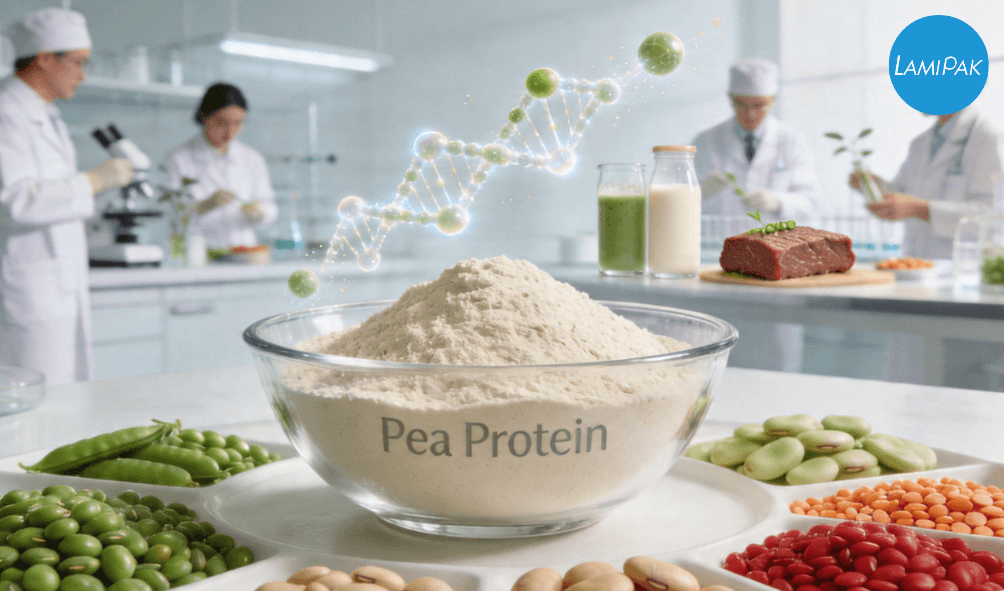
Globally, pea protein has emerged as the leading plant protein ingredient in new product development, with mung bean, fava, and lentil proteins gaining traction. In SEA, these trends are being refracted through a local lens. Mung bean protein is gaining serious attention given its regional familiarity and complete amino acid profile. Jackfruit, banana blossom, and coconut-based proteins are being developed specifically for regional cuisines — formats that would be meaningless in European markets but carry genuine cultural resonance here.
Traditional fermented proteins are also having a commercial moment. Globally, tofu and tempeh recorded an 11% rise in dollar sales and a 4% rise in unit sales in 2024, reflecting renewed consumer appetite for minimally processed, recognizable ingredients. For SEA’s food manufacturers, this is a validation of their existing raw material base. Tempeh, in particular, is showing strong export potential alongside its domestic premium positioning.
|
Analyst’s Lens The most durable plant-based brands in SEA will be those that anchor their positioning in local ingredients and culinary traditions rather than importing Western formats wholesale. A jackfruit-based product developed for Indonesian warungs is a fundamentally different — and more defensible — proposition than a lab-engineered burger patty designed for a Singapore hawker center. |
The Headwinds: Price, Taste, and Trust
No honest assessment of this market can ignore the friction points. Globally, price and taste remain the two dominant barriers to plant-based adoption — and SEA’s highly price-sensitive middle class makes this especially acute. At the same time, venture capital funding for alternative proteins declined 27% globally in 2024 to USD 1.1 billion, signaling that investor patience for loss-making scale plays is thinning. Brands in SEA must demonstrate a credible path to price parity with conventional proteins, not simply rely on health premiums that only affluent urban consumers can afford.
Consumer trust in heavily processed alternative proteins is also a consideration. Across markets, “naturalness” ranked as the second most desired product attribute after health in 2024 consumer research, while perceived artificiality emerged as the third largest purchase barrier. This places clean-label, minimally processed plant-based products in a structurally advantaged position — a tailwind for traditional formats like tofu and tempeh and a challenge for highly engineered meat analogues.
Strategic Implications: Where to Invest, What to Build
Three strategic priorities emerge for FMCG players seeking to capture the SEA alternative protein opportunity. First, lead with beverages: plant-based drinks are the lowest-friction entry point for consumers, benefit from existing cold-chain infrastructure, and offer the clearest premiumization pathway through functional and flavored formats. Second, localize deeply: brands that reformulate for regional taste profiles, source from local ingredients, and communicate through culturally resonant narratives will outperform imported formats. Third, prioritize Indonesia and Vietnam for volume growth, while using Thailand and Malaysia as test beds for premiumization and product innovation — the market sophistication there creates a faster feedback loop.
The verdict: Southeast Asia’s alternative protein market is not a Western trend transplanted into tropical soil. It is an indigenous market evolution, rooted in centuries of plant-based eating, now supercharged by economic development and health awareness. Brands that respect that distinction — and build their strategy around it — will find a market that is not just large, but genuinely loyal.
Sources: Global Data; Lamipak Market Intelligence Report (Dec 2025); MarketDataForecast; Mordor Intelligence; GFI APAC 2024 State of the Industry; Future Market Insights; The Good Food Institute; Virtue Market Research.