
On-the-go consumption lifestyle in Southeast Asia (SEA)
In Southeast Asia, on-the-go (OTG) consumption is no longer a niche “urban convenience” behavior—it’s becoming a default eating-and-drinking pattern shaped by city congestion, time scarcity, and retail format change.
What “on-the-go” means in SEA today
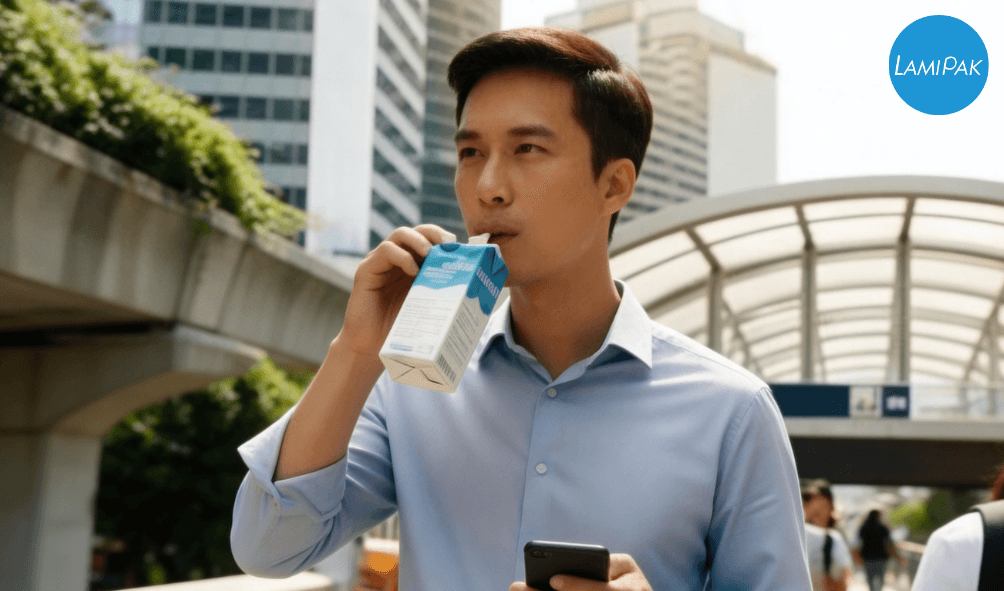
In Southeast Asia, on-the-go (OTG) consumption is no longer a niche “urban convenience” behavior—it’s becoming a default eating-and-drinking pattern shaped by city congestion, time scarcity, and retail format change. Consumers increasingly replace sit-down occasions with portable micro-occasions: commuting, between meetings, after-school, gym, late afternoon “pick-me-up,” and post-dinner refreshment. This is precisely why categories such as RTD milk, drinkable yogurt, plant-based drinks, and juice/still drinks are growing steadily across SEA-6 in your dataset.
Macro driver 1: Time scarcity and traffic friction (hard evidence)
OTG behavior is structurally reinforced by commuting realities in key SEA metros. TomTom’s Traffic Index (which reports average travel time for a 10 km drive) illustrates the “time tax” consumers face daily: Ho Chi Minh City ~31 min 55 sec, Jakarta ~26 min 19 sec, and Bangkok ~22 min 59 sec (latest city pages).
In practical terms, this level of congestion favors single-hand consumption, products that are spill-safe, and formats that can be consumed quickly (bottles, slim cartons, resealable caps). It also increases the share of consumption occurring outside the home—not necessarily in restaurants, but “in motion” (vehicles, ublic transport, sidewalks, offices).
Macro driver 2: Retail shift toward “grab-and-go” formats (hard evidence)
OTG is inseparable from the rise of proximity retail. In Vietnam, Vietcap’s sector work highlights a structural format shift: while modern grocery grew at ~11% CAGR (2016–2023), the minimart segment outpaced dramatically at ~45% CAGR (2016–2023).
Minimarts and convenience formats are purpose-built for OTG: high frequency trips, small baskets, and strong cold-chain front-of-store execution for RTD
beverages. This channel transition explains why beverage brands increasingly win through availability + visibility + impulse execution, not just
through mass advertising.
Macro driver 3: Digital convenience extends OTG beyond physical stores (hard evidence)
SEA’s OTG lifestyle is now “dual-track”: physical grab-and-go plus digital ordering. Momentum Works reports SEA food delivery GMV reached US$19.3B in 2024 (+13% YoY).
Even when delivery is consumed at home, it behaves like OTG in one key sense: it compresses meal planning time and raises demand for ready-to-consume beverages that pair with delivered food (juice, functional drinks, milk-based beverages). This dynamic reinforces the shift toward packaged RTD solutions and strengthens the role of e-commerce / quick commerce as a discovery and replenishment channel.
How OTG is reshaping beverage demand
(linking to your SEA data)
Your SEA-6 outlook already shows the beverage mix moving toward convenient, functional, and “better-for-you” options, with meaningful growth in plant-based and functional segments. OTG is a major underlying engine for that shift:
- RTD milk becomes “portable nutrition” : Across SEA, RTD milk is increasingly consumed as a snack substitute (school, office, commute). In your dataset, RTD milk remains a larSEA-6, with steady growth outlook. The OTG play is to win with single-serve, flavored variants, and clear functional cues (energy, protein, calcium).
- Drinkable yogurt becomes “daily gut-health ritual” : Drinkable yogurt is one of the most OTG-native rently portable and strongly associated with digestive benefits. Your Vietnam and Thailand sections emphasize drinkable yogurt’s scale and forecast growth. OTG pushes brands to optimize for chilled availability, short consumption time, and habit-forming messaging (“one bottle a day”).
- Plant-based milk grows via “lightness + modern lifestyle” : Plant-based beveragesmoments where consumers want something perceived as lighter than dairy. Your data shows plant-based markets are sizable (Thailand) and growing (notably Indonesia’s growth profile) with channel momentum in modern retail and eRetailers. OTG strengthens non-soy premiumization (oat/almond) in urban convenience and café-linked occasions.
- Juice/still drinks compete for refreshment occasions : Hot climate + mobility increases “hydration on the move.” Your deck large across SEA-5 and highlights channel dynamics including rising HoReCa importance in some markets. OTG favors lower-sugar, “refreshing” positioning and packaging designed for immediate consumption.
Strategic implications (what winners do)
- Occasion-first portfolio design: Compete around micro-occasions (commute, on slump), not around dairy/juice silos.
- Channel-specific execution: Minimarts/CVS require impulse visibility; e-commerce requires education and bundles; modern trade enables premium laddering.
- Packaging as a growth lever: Resealable, ergonomic, and single-serve formats directly monetize OTG frequency.
- Value architecture: OTG increases frequency but can be price-sensitive; winning brands offer both entry packs (trial) and premium functional SKUs (margin).
Bottom line: OTG in SEA is a structural lifestyle shift powered by congestion, proximity retail growth, and digital convenience. The brands that win will build portfolios around fast, portable occasions—and scale them through minimarts/CVS + modern trade + digital in a single integrated route-to-market model.